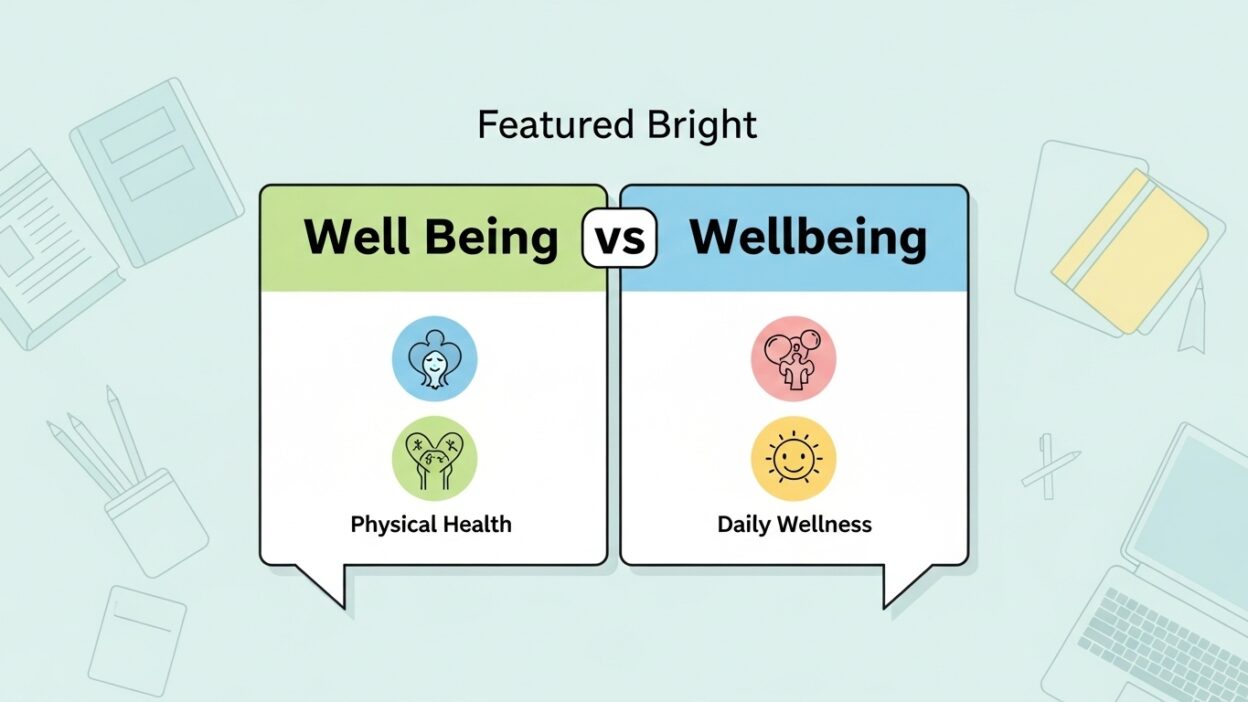
Well Being vs Wellbeing
| Term | Meaning | Usage Tip | Pronunciation |
| Well being | The state of being happy, healthy, and comfortable | Often used in formal or older texts | /wel ˈbiː.ɪŋ/ |
| Wellbeing | Same meaning, written as one word | Modern, widely accepted | /ˈwel.biː.ɪŋ/ |
✅ Key Point: Both words mean the same thing. The main difference is style and region.
Many students and learners get confused about well being vs wellbeing. They look almost the same, both relate to health and happiness, and sometimes appear in emails, essays, or news articles.
The confusion comes from:
- Different spellings (two words vs one word)
- Regional preferences (US vs UK English)
- Modern vs formal writing
This article will help you understand clearly so you never mix them up.
Simple Background of Well Being and Wellbeing
- Well being is older. It comes from combining “well” (good, happy, healthy) + “being” (state of existence).
- Over time, writers started writing it as wellbeing (one word) for simplicity.
- Today, both forms are correct, but wellbeing is preferred in modern writing.
Clear Difference Between Well Being and Wellbeing
- Meaning: Both describe mental wellbeing, physical wellbeing, and overall happiness.
- Form:
- “Well being” = two words, slightly formal, older style
- “Wellbeing” = one word, modern, widely accepted
- “Well being” = two words, slightly formal, older style
- Region:
- UK and international English: wellbeing
- US English: well being is sometimes used in formal texts
- UK and international English: wellbeing
Tip for ESL learners: Think of “wellbeing vs wellness”: wellness = mostly physical health; wellbeing = physical + mental + emotional + social health.
Comparison Table: Well Being vs Wellbeing
| Feature | Well Being (two words) | Wellbeing (one word) |
| Meaning | State of being happy & healthy | State of being happy & healthy |
| Form | Two words | One word |
| Style | Formal / older text | Modern & widely accepted |
| Common region | USA (sometimes) | UK & international |
| Usage in writing | Essays, reports, formal documents | Blogs, news, social media, student writing |
| Pronunciation | /wel ˈbiː.ɪŋ/ | /ˈwel.biː.ɪŋ/ |
| Example sentence | His well being is important. | His wellbeing is important. |
Which One to Use and When
1. Use wellbeing when:
- Writing modern English texts
- Writing about student wellbeing, mental health, or emotional health
- Posting on social media or blogs
2. Use well being when:
- Following older or formal English style guides
- Writing formal reports, academic papers, or legal documents
3. Quick Trick: If unsure, wellbeing is safe in most modern contexts.
Common Mistakes People Make
- Writing well-being with a hyphen everywhere → now less common
- Mixing up wellbeing vs wellness → remember: wellness = physical; wellbeing = all-around health
- Using well being in informal contexts → modern texts prefer wellbeing
- Confusing meaning → always remember both relate to happiness, comfort, and health
Everyday Real Life Examples
Emails:
- “I hope your wellbeing is good during exams.”
School essays:
- “The school program helps improve student wellbeing.”
Social media posts:
- “Take care of your mental wellbeing! 💖 #SelfCare”
Daily conversation:
- “Good sleep improves your well being.”
- “Eating fruits and walking daily supports your wellbeing.”
Workplace context:
- “Our company focuses on employee wellbeing and mental health.”
Extra Context Table: When to Use Each Form
| Context | Recommended Form | Example Sentence |
| Academic / formal essay | well being | “The well being of students is important.” |
| Blog / newspaper / modern text | wellbeing | “Promoting wellbeing is key for mental health.” |
| Social media / informal | wellbeing | “Take care of your wellbeing today! 💖” |
| Legal / report writing | well being | “Employee well being is monitored quarterly.” |
Short Learning Section for Students and Beginners
- Remember: Both mean being happy, healthy, and safe.
- Tip 1: Modern writing → wellbeing
- Tip 2: Formal/older writing → well being
- Tip 3: Don’t worry about hyphen (well-being)
- Tip 4: Practice sentences:
- “I care about my wellbeing.”
- “Healthy habits improve your well being.”
- “I care about my wellbeing.”
FAQ: Well Being vs Wellbeing
Q: Are “well being” and “wellbeing” the same?
A: Yes, they mean the same thing.
Q: Which one is correct in American English?
A: Both are correct; well being is more traditional.
Q: Which one is correct in British English?
A: Wellbeing is preferred.
Q: Can I use “well-being” with a hyphen?
A: Yes, in formal writing, but modern English prefers wellbeing.
Q: Is wellbeing only about physical health?
A: No, it includes mental wellbeing, emotional, social, and physical health.
Q: Can students use wellbeing in essays?
A: Yes, it is modern and widely accepted.
Q: How do I pronounce wellbeing?
A: /ˈwel.biː.ɪŋ/ – sounds like “WELL-bee-ing.”
Q: Can wellbeing and wellness be used interchangeably?
A: Not always. Wellness = mostly physical; wellbeing = all-around health.
Q: How can I remember which one to use?
A: Use wellbeing for modern contexts, well being for formal/older texts.
Conclusion
- Well being vs wellbeing = same meaning, different form and style
- Wellbeing = modern, widely used, perfect for students, blogs, social media
- Well being = older, formal, or traditional texts
- Both show that mental wellbeing, physical wellbeing, and happiness are important.
Now, you can confidently use wellbeing or well being depending on your context. Whether it’s school, emails, social media, or work, you’ll know exactly which form to choose!