Many students, learners and beginners get confused between “presence” and “presense”. They look similar, sound almost the same, and one tiny spelling mistake can make writing incorrect.
This article will explain the difference between presence and presense, show real-life examples, include pronunciation tips, and give a mini-quiz so you never confuse them again.
The words presence and presense are easy to mix up because:
- They look almost identical.
- They sound very similar.
- One is correct, the other is always wrong.
Most people use presense by mistake when they mean presence, especially in emails, social media posts, or homework.
Good news: Once you understand it, remembering is very easy!
Quick Answer
Here’s the simple way to remember:
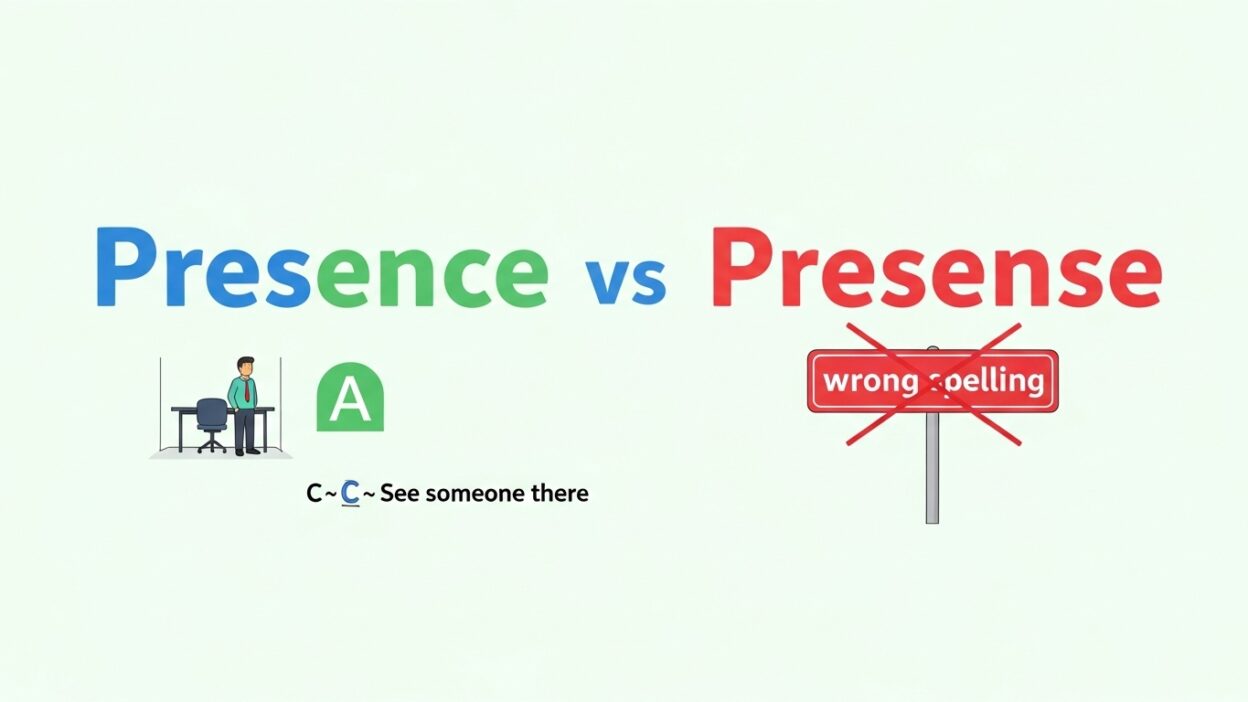
- Presence ✅ – Correct word. Means being somewhere, existing, or noticeable.
- Presense ❌ – Wrong word. Always a spelling mistake.
Memory Tip: Presence has a “c” → think “see someone there.”
Pronunciation Guide
For ESL learners, pronunciation is important:
- Presence → /ˈprez.əns/ (stress on PREZ)
- Presense → ❌ Not a word, so do not pronounce it
Origin or Background
- Presence comes from Latin “praesentia”, meaning “being at hand” or “being present.”
- Adopted in English in the 14th century.
- It now means:
- Being physically somewhere
- Existence of something
- Influence or noticeable feeling
- Being physically somewhere
Tip: There is no English word “presense.” It is only a common spelling mistake.
Clear Explanation of the Difference
| Word | Correct? | Meaning | Example Sentence |
| Presence | ✅ Yes | Being somewhere, existing, noticeable | “Her presence in class makes it lively.” |
| Presense | ❌ No | Wrong spelling of presence | ❌ “I noticed his presense at the party.” |
Summary: Use presence in all situations. Never use presense.
When to Use Presence
Use presence in these situations:
- Someone is physically there
- “I enjoyed your presence at the team meeting.”
- “I enjoyed your presence at the team meeting.”
- Something exists
- “The presence of wildlife makes the forest beautiful.”
- “The presence of wildlife makes the forest beautiful.”
- Influence or feeling someone gives
- “He has a strong presence on stage.”
- “He has a strong presence on stage.”
Common Mistakes
Watch out for these mistakes:
- Writing presense instead of presence
- Forgetting the “c” in presence
- Thinking presence only applies to people, not objects or feelings
Quick tip: If you can see it or feel it exists, write presence.
Everyday Real Life Examples
Here are practical examples for emails, news, social media, and daily life:
- Emails
- ✅ “Thank you for your presence at the team meeting.”
- ❌ “Thank you for your presense at the meeting.”
- ✅ “Thank you for your presence at the team meeting.”
- News Articles
- ✅ “The president’s presence at the event surprised everyone.”
- ❌ “The president’s presense at the event surprised everyone.”
- ✅ “The president’s presence at the event surprised everyone.”
- Social Media
- ✅ “Your presence brightens my feed!”
- ❌ “Your presense brightens my feed!”
- ✅ “Your presence brightens my feed!”
- Daily Conversation
- ✅ “I could feel her presence in the room even without seeing her.”
- ❌ “I could feel her presense in the room.”
- ✅ “I could feel her presence in the room even without seeing her.”
- Schoolwork / Essays
- ✅ “The presence of historical artifacts makes the museum interesting.”
- ❌ “The presense of historical artifacts makes the museum interesting.”
- ✅ “The presence of historical artifacts makes the museum interesting.”
Short Learning Section for Students
Step 1: Remember presence meaning = being somewhere, existing, or noticeable.
Step 2: Always check spelling: presence has a “c”.
Step 3: Practice writing sentences:
- “I enjoy your presence.”
- “The cat’s presence is calming.”
- “The presence of stars makes the night magical.”
Mini Memory Trick: Presence = C → See someone or something there
Mini Practice Quiz
Fill in the blanks with presence or presense:
- “I felt her _______ in the room.” ✅
- “His _______ at the party was surprising.” ✅
- “The _______ of the teacher improved the classroom mood.” ✅
- “I noticed his _______ on social media.” ✅
Answer Key: All blanks = presence
FAQ Section
Q1: Is presense a real word?
A: No. It is always a spelling mistake.
Q2: How do I remember the correct spelling?
A: Presence has a “c” → think see someone there.
Q3: Can presence mean more than being physically somewhere?
A: Yes. It can also mean influence or existence.
Q4: Is presence only for people?
A: No. It can refer to objects or feelings.
Q5: Can I ever use presense?
A: No. Always replace it with presence.
Q6: What is a simple sentence using presence?
A: “I enjoyed her presence at the party.”
Q7: Does presence sound like presense?
A: Yes, which is why people often confuse them.
Q8: Is it common for learners to make this mistake?
A: Very common, especially in typing or casual writing.
Conclusion
The difference between presence and presense is simple:
- Presence ✅ – correct, means being somewhere, existing, or noticeable
- Presense ❌ – incorrect, never use
By remembering the “c” in presence, practicing sentences, using the mini quiz, and visual memory tips, you will never confuse them again.
Key takeaway: If you can see it or feel it exists, it’s presence. Forget the extra “s” mistake, and your English will be much stronger!