Many students, learners and beginners get confused between payed vs paid. They sound almost the same, but their meaning and usage are different.
This guide will explain everything in simple English, with real life examples, learning tips, and practice exercises so you can use the right word every time.
People mix up paid vs payed because:
- They sound the same when spoken.
- Old books or online texts sometimes use payed, which looks correct.
- Beginners don’t know which one is used for money and which one is for ropes or chains.
By the end of this guide, you will understand:
- Paid meaning
- Payed meaning
- How to use paid vs payed in sentences
- Common mistakes and how to avoid them
Quick Answer: Paid vs Payed
Here’s a simple way to remember:
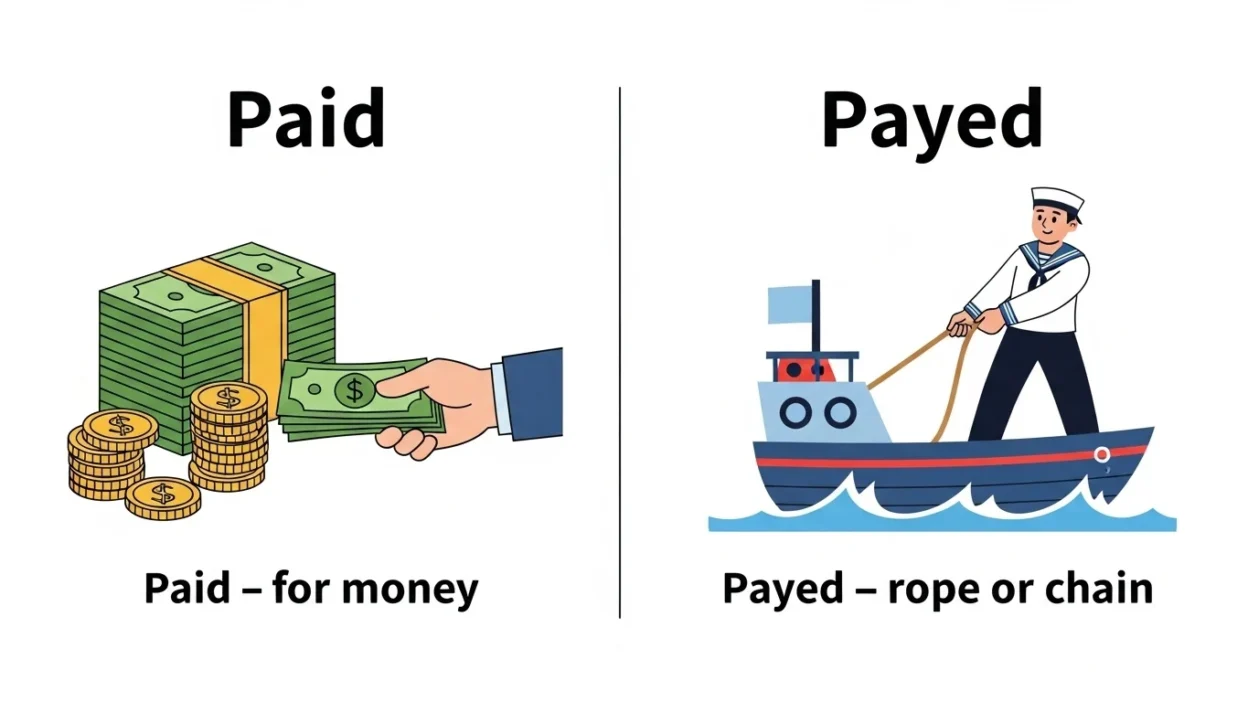
- Paid ✅ → Past tense of pay (to give money).
- Example: I paid $10 for my lunch.
- Example: I paid $10 for my lunch.
- Payed ⚠️ → Used for letting out ropes, chains, or lines (mainly in sailing).
- Example: The sailor payed the rope carefully.
- Example: The sailor payed the rope carefully.
💡 Tip: If you talk about money, always use paid.
Origin of Paid and Payed
- Paid comes from Old English pagan, which means to give money.
- Payed also comes from the same root but stayed in special contexts, mainly related to ropes and sailing.
So, paid is standard for money, and payed is now mostly historical or nautical.
Clear Explanation of the Difference
| Word | Meaning | Example |
| Paid | Past tense of giving money (paid meaning) | I paid my teacher yesterday. |
| Payed | Let out rope, line, or chain (payed meaning) | The crew payed the anchor chain carefully. |
Quick Rule:
- Money → paid
- Rope, chain → payed
Most learners only need paid in daily life.
Which One to Use and When
Use “paid” for daily situations:
- Paying bills or rent
- Paying for groceries or coffee
- Paying someone for work
Use “payed” only in rare situations:
- Sailing or nautical texts
- Letting out rope, chain, or line
💡 Rule of Thumb: When in doubt, always use paid.
Common Mistakes Students Make
- Writing payed when talking about money
- ❌ Wrong: I payed my friend.
- ✅ Correct: I paid my friend.
- ❌ Wrong: I payed my friend.
- Using paid for ropes or chains in sailing texts
- ❌ Wrong: The sailors paid the anchor chain.
- ✅ Correct: The sailors payed the anchor chain.
- ❌ Wrong: The sailors paid the anchor chain.
- Mixing spoken and written forms
- “I payed for it” is common in speech, but wrong in writing when talking about money.
- “I payed for it” is common in speech, but wrong in writing when talking about money.
Everyday Real Life Examples
Emails:
- Correct: I paid the invoice yesterday.
- Wrong: I payed the invoice yesterday.
News:
- Correct: The company paid its employees on time.
- Wrong: The company payed its employees on time.
Social Media:
- Correct: I paid $10 for this coffee ☕
- Wrong: I payed $10 for this coffee ☕
Daily Use:
- Correct: She paid for the bus ticket.
- Correct (nautical context): The sailor payed the rope carefully.
ESL Practice Tip: Ask yourself:
Am I talking about money or rope? → Money = paid, Rope = payed
Learning Section for Beginners & Students
Step 1: Think Money = Paid
- Example: I paid for my lunch.
Step 2: Think Rope = Payed
- Example: The sailor payed the rope slowly.
Step 3: Always check before writing
- Tip: If your sentence is about paying someone, write paid.
Mini Practice Exercise: Fill in the blanks
- I _______ $5 for a snack. →
- The sailor _______ out the rope carefully. →
- She _______ her teacher for extra help. →
✅ Answers: 1) paid 2) payed 3) paid
Paid vs Payed FAQ
Q1: Can I write “payed” instead of “paid”?
A: Only for ropes, chains, or nautical contexts. For money, always use paid.
Q2: Is “paid” correct in emails or letters?
A: Yes, always use paid when mentioning money.
Q3: Is “payed” still used today?
A: Rarely. Mostly in sailing or historical texts.
Q4: How do I remember the difference?
A: Money → paid, Rope → payed.
Q5: Can “payed” ever mean gave money?
A: No. Always use paid for money.
Q6: Which one should students learn first?
A: Paid, because it is much more common.
Q7: Can “paid” be used in old books?
A: Yes, modern English prefers paid even if old texts use “payed.”
Q8: What are common mistakes learners make?
A: Writing payed when talking about money or confusing past tense with present tense.
Q9: Are there phrases with paid I should know?
A: Yes! Common ones: paid off, prepaid, paid in full.
Memory Tip for Learners
- Paid → Think 💵 money
- Payed → Think ⚓ rope or chain
Shortcut: If it involves money, always choose paid.
Conclusion
The difference between payed vs paid is simple:
- Paid → Past tense of giving money (paid meaning) ✅
- Payed → Letting out rope or chains (payed meaning) ⚓
💡 Pro Tip: For daily English, paid is almost always correct. Use payed only for ropes, chains, or historical sailing texts.
By following this guide, you can confidently use paid vs payed in emails, social media, school work, and conversations.