If you’ve ever arrived at an airport and wondered,
“Wait… is this passport control or customs?” you’re not alone.
Many travelers, especially students and first-time flyers, feel confused because both steps happen at the airport and involve officials checking something. It can be stressful if you don’t know what to expect.
The good news is: it’s actually very simple once you understand the difference. This guide will explain everything in a calm and easy way so you feel confident during your next trip.
Quick Answer
Here is the simplest way to understand it:
Passport Control (Immigration):
- Checks who you are
- Looks at your passport and visa
- Decides if you can enter the country
Customs:
- Checks what you are carrying
- Looks at your luggage and items
- Makes sure you are not bringing restricted or illegal goods
👉 Easy memory tip:
Passport = Person | Customs = सामान (things)
Why These Two Systems Exist
Every country needs to control two important things:
- People entering the country
- Goods entering the country
That’s why there are two separate checks:
- Passport control handles people
- Customs handles items
This system helps keep the country safe and organized.
What Happens at Passport Control?
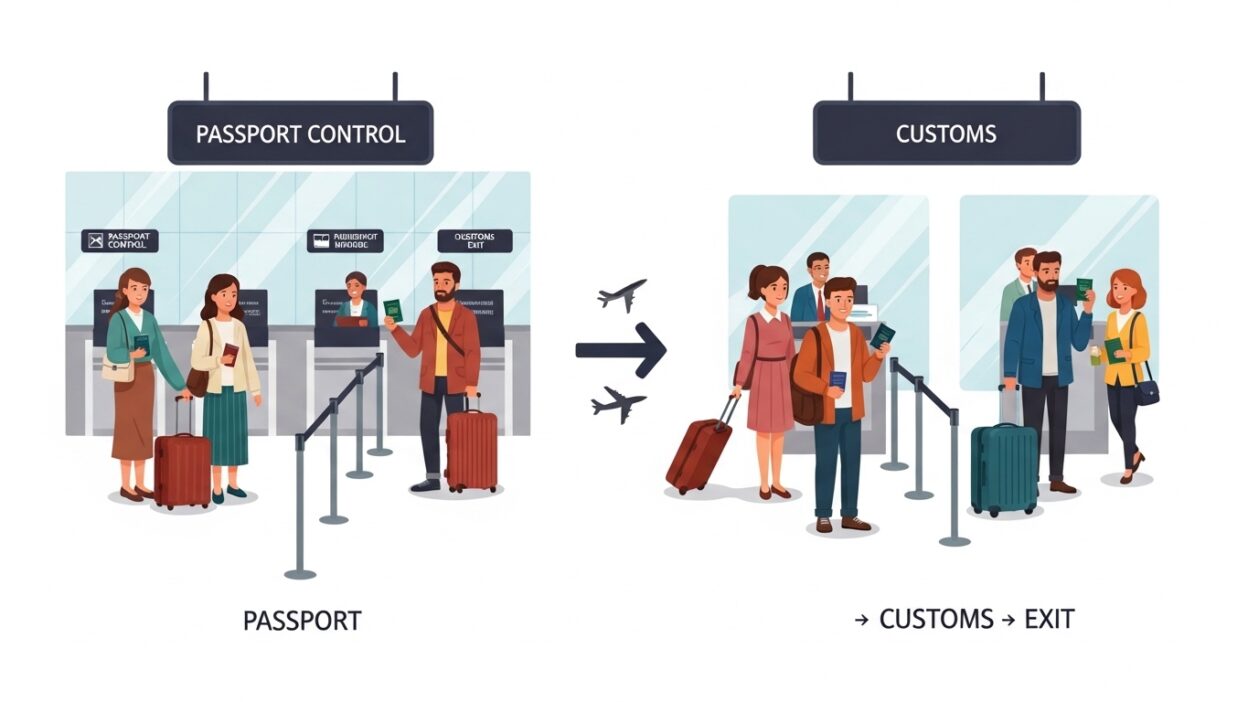
Passport control is usually your first stop after landing.
What officers do:
- Check your passport
- Check your visa (if required)
- Ask simple questions like:
- Why are you visiting?
- How long will you stay?
What they are checking:
- Your identity
- Your travel purpose
- Your permission to enter
Simple example:
You walk up to the officer, show your passport, answer a few questions, and get a stamp.
👉 If everything is okay, you can enter the country.
What Happens at Customs?
Customs happens after passport control, usually after you collect your bags.
What officers do:
- Scan your luggage
- Ask what you are carrying
- Check for restricted items
Common things they check:
- Large amounts of money
- Food items
- expensive goods
- Illegal or banned items
👉 Their goal is to protect the country from unsafe or illegal goods.
Step by Step Airport Experience
Let’s make it very clear with a real travel flow:
- You land at the airport
- You go to passport control
- You collect your luggage
- You go through customs
- You exit the airport
👉 This simple order helps remove all confusion.
Comparison Table
| Feature | Passport Control | Customs |
| Focus | You (the traveler) | Your luggage and items |
| Main Check | Passport, visa | Bags, goods |
| Purpose | Allow entry into country | Control what enters country |
| Questions | About your trip | About your items |
| When it happens | Before baggage claim | After baggage claim |
| Risk Level | Strict (entry decision) | Moderate (item checking) |
Which One Comes First?
Many people ask this question.
👉 Passport control always comes first
👉 Customs always comes after
If you remember just this, you will never get confused again.
Practical Travel Tips (Very Helpful)
Tips for Passport Control
- Keep your passport in your hand
- Answer questions clearly and honestly
- Stay calm and polite
- Know your travel purpose
Tips for Customs
- Don’t carry banned items
- Declare items if required
- Follow signs (Green = nothing to declare, Red = something to declare)
- Don’t hide anything
Simple Rule:
👉 If unsure, always declare — it’s safer.
Common Mistakes to Avoid
1. Thinking both are the same
They are different steps with different purposes.
2. Standing in the wrong line
Always follow airport signs carefully.
3. Not preparing documents
Passport control requires proper documents.
4. Carrying restricted items
Some food or goods may not be allowed.
5. Giving unclear answers
Short and clear answers are always better.
Real Life Examples
At the Airport
“I finished passport control in 10 minutes, but customs took longer because they checked my bags.”
Talking to a Friend
“They didn’t ask many questions at passport control, but customs checked my suitcase.”
Social Media Post
“First international trip! Passport control was easy, customs was a bit strict 😅”
News Style
“Passengers experienced delays at passport control, while customs checks remained smooth.”
What Happens If There Is a Problem?
At Passport Control
- You may be asked more questions
- In rare cases, entry can be denied
At Customs
- Your bags may be opened
- Items may be taken away
- You may have to pay a fine
👉 Don’t panic — just stay calm and cooperate.
Learning Section for Beginners
Super Easy Trick
- Passport control = Face check
- Customs = Bag check
Practice
Fill in the blanks:
- __________ checks your passport
- __________ checks your luggage
- Passport control comes __________ customs
Answers:
- Passport control
- Customs
- Before
FAQ Section
1. Are passport control and customs the same?
No. One checks your identity, the other checks your items.
2. Which comes first at the airport?
Passport control comes first, then customs.
3. Can I skip customs?
No, you must pass through customs when arriving.
4. What if I carry food or money?
You may need to declare it at customs.
5. What happens if I fail a customs check?
Your items may be taken, or you may pay a fine.
6. What if I don’t have the right documents?
You may face problems at passport control and could be denied entry.
7. Do all countries have these checks?
Yes, almost all countries follow this system.
8. How long does it take?
It depends on the airport, but usually:
- Passport control: 5–30 minutes
- Customs: 5–20 minutes
Conclusion
Passport control and customs may sound confusing at first, but they are actually very simple.
- Passport control checks you
- Customs checks your belongings
Once you understand this difference, traveling becomes much easier and less stressful.
Next time you arrive at an airport, you’ll know exactly where to go, what to do, and how to feel confident.