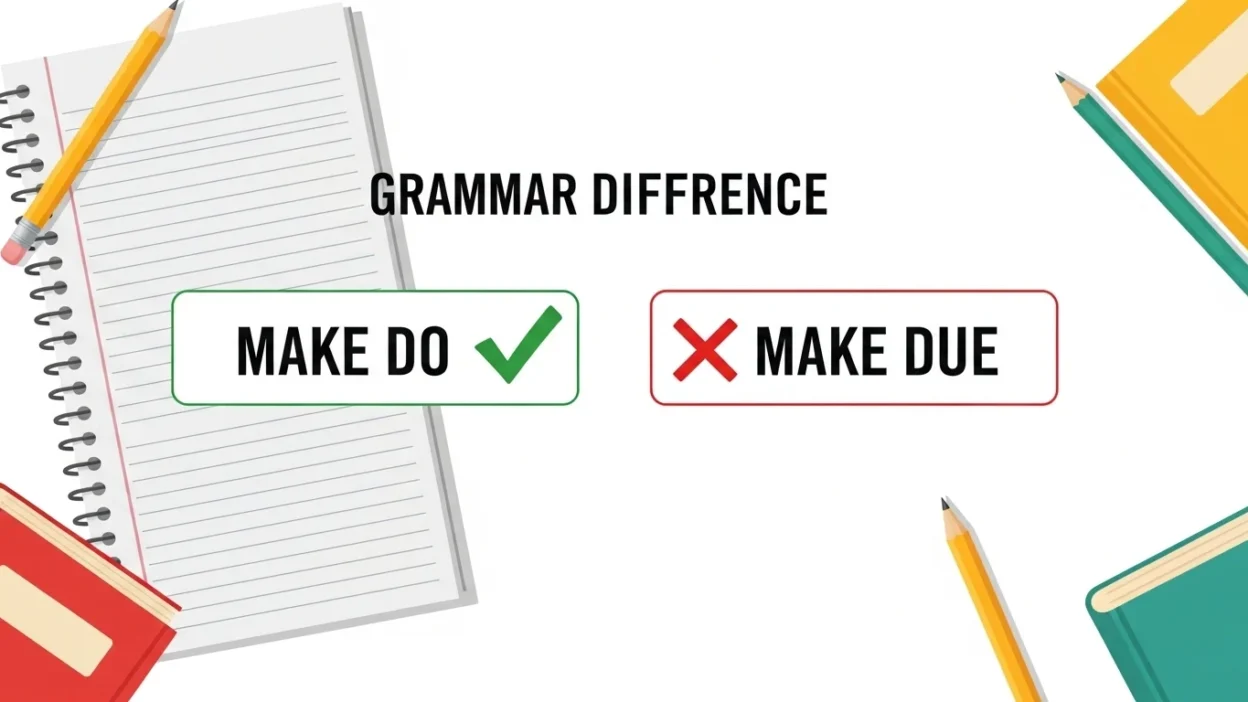
Many people wonder “is it make do or make due?” The two phrases sound exactly the same when spoken, which is why they often get mixed up in writing. However, only one of them is correct in normal English usage.
If you are a student, an English learner, or someone who simply wants to avoid common grammar mistakes, understanding make do vs make due will help you write and speak more clearly.
In this guide, you will learn the make do meaning, why make due meaning is usually incorrect, and how to use make do in a sentence with real-life examples.
Quick Answer: Make Do vs Make Due
Here is the short and clear answer:
- Make do ✅
- Correct English phrase
- Make do meaning: to manage or cope with what you have
- Example: “We don’t have enough chairs, so we will make do with boxes.”
- Correct English phrase
- Make due ❌
- Usually incorrect
- A common spelling mistake caused by pronunciation
- Usually incorrect
Simple rule: If you mean “manage with what you have,” always write make do.
Why People Get Confused
The confusion between make do vs make due happens because the words do and due sound exactly the same in spoken English.
Many people already know the word due, which appears in phrases like:
- “The rent is due tomorrow.”
- “My homework is due on Monday.”
Because the sound is identical, writers sometimes replace do with due by mistake. This creates the incorrect phrase make due.
Understanding this simple pronunciation confusion helps explain why the make do vs make due grammar mistake happens so often.
Origin of the Phrase “Make Do”
The phrase make do has been used in English for a long time. It is an English idiom that means to manage with limited resources.
In older English, the word do could mean to handle or manage a situation. Over time, the expression make do became a common way to describe adapting to a difficult or limited situation.
For example:
- People during difficult times often had to make do with very little food.
- Families sometimes made do with old furniture instead of buying new items.
This historical usage explains the make do definition clearly.
Difference Between Make Do and Make Due
To fully understand the difference between make do and make due, it helps to look at what each word means.
Make do
- Correct expression
- Means to manage with what you have
Make due
- Incorrect in this context
- “Due” refers to deadlines, payments, or obligations
For example:
Correct
✔ “We will make do with the old computer.”
Incorrect
✘ “We will make due with the old computer.”
When people search for make do vs make due difference explained, this is the key point they need to remember.
Make Do vs Make Due Comparison Table
| Phrase | Meaning | Correct Usage | Example |
| Make do | Manage with what you have | Correct | “We’ll make do until we buy a new one.” |
| Make due | No correct meaning here | Incorrect | “We’ll make due until we buy a new one.” |
This table makes the make do vs make due difference easy to understand at a glance.
When to Use “Make Do”
You should use make do when something is missing and you must manage with what you have.
Common situations include:
- Temporary solutions
- Limited resources
- Everyday problem solving
Examples of how to use make do in a sentence:
- “I forgot my charger, so I will make do with a power bank.”
- “We don’t have enough plates, but we can make do.”
- “Until we buy new furniture, we’ll make do with the old chairs.”
- “The hotel was full, so we had to make do with a small room.”
These are clear make do sentence examples used in daily life.
Correct vs Incorrect Sentences
One of the easiest ways to understand make do vs make due grammar is to compare correct and incorrect sentences.
Correct sentences:
✔ “We didn’t have butter, so we made do with oil.”
✔ “I forgot my notebook, but I’ll make do with loose paper.”
✔ “They had little money but learned to make do.”
Incorrect sentences:
✘ “We didn’t have butter, so we made due with oil.”
✘ “I forgot my notebook, but I’ll make due with loose paper.”
These comparisons clearly show why people say make due instead of make do.
Everyday Real Life Examples
Here are some practical make do phrase examples used in real situations.
Emails
“We don’t have the updated files yet, so please make do with the previous version.”
News
“During the power outage, many families had to make do with candles.”
Social Media
“No coffee machine today ☕ I’ll make do with instant coffee.”
Daily Conversation
Friend: “There’s no milk left.”
You: “That’s okay, we’ll make do without it.”
These examples help explain make do meaning in simple English.
Easy Trick to Remember the Difference
A simple trick can help you remember make do vs make due forever.
Think about the meanings of the words:
DO = do something or manage
Example:
“We will make do with what we have.”
DUE = deadline or payment
Example:
“My bill is due tomorrow.”
If the sentence means manage with what you have, the correct phrase must be make do.
Learning Section for Students and Beginners
For English learners, understanding make do meaning for students is very helpful.
Simple rule:
Make do = manage with limited resources
Practice these make do sentence examples:
- “There was no sugar, so we made do with honey.”
- “My phone broke, but I’ll make do with my old one.”
- “The classroom had no chairs, so students had to make do with the floor.”
Writing your own sentences is the best way to learn this expression.
FAQ About Make Do vs Make Due
Is it make do or make due?
The correct phrase is make do.
What does make do mean?
The make do definition is to manage or cope with what you have.
Is “make due” ever correct?
No. In this situation, it is almost always a spelling mistake.
Why do people write make due?
Because do and due sound the same when spoken.
Is make do an idiom?
Yes, it is an English idiom meaning to manage with limited resources.
Is make do formal or informal?
It is usually used in everyday conversation but can also appear in writing.
Can I use make do in essays?
Yes, but it works best in natural, conversational writing.
What is a simple example of make do?
“We didn’t have chairs, so we had to make do with boxes.”
Conclusion
The confusion between make do vs make due happens because the words sound the same when spoken. However, only make do is correct when you want to say manage with what you have.
Learning the difference between make do and make due helps you avoid a common English mistake.
By remembering the make do meaning, studying real examples, and using the simple memory trick, you can confidently use the phrase in everyday conversation and writing.
Whenever you face a situation where something is missing or limited, just remember the correct expression: make do.