English can be tricky. Words that look alike or sound similar often confuse students and learners. One common confusion is “laid vs layed.”
Many wonder which is correct and when to use it. This guide will explain the difference between laid and layed in very simple English so you understand it on the first read.
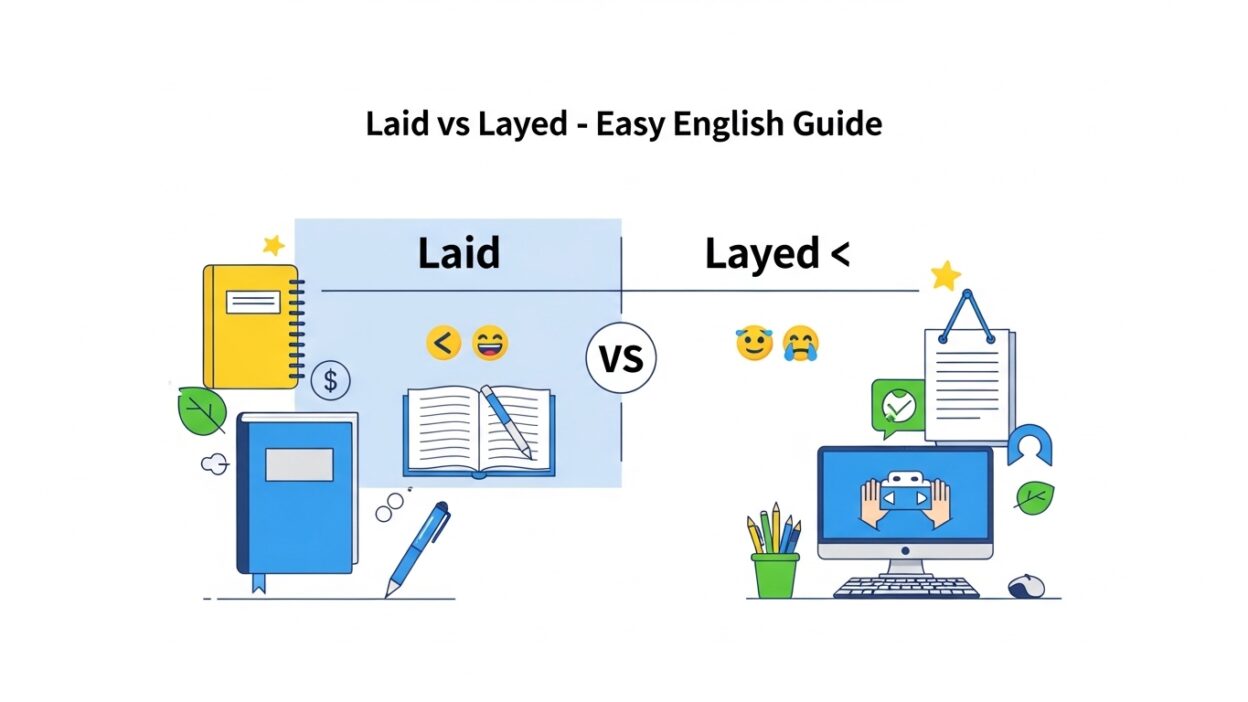
Quick Answer: Laid vs Layed ✅❌
| Word | Correct? | When to Use |
| Laid | ✅ Yes | Past tense and past participle of lay (to put something down) |
| Layed | ❌ No | Incorrect spelling – do not use in standard English |
Tip: If you ask “laid or layed correct?”, always choose laid.
Why People Get Confused
- Both words look and sound similar.
- English verbs sometimes change in unexpected ways.
- People see layed meaning online and think it is correct.
- Learners mix past tense of lay with past participle.
Key point: Once you remember “laid = past tense of lay”, it’s easy to use correctly.
Lay vs Laid vs Lie: Simple Comparison
Many beginners confuse lay and lie too. Here’s a quick table:
| Verb | Meaning | Present | Past | Past Participle | Example |
| Lay | To put something down | lay | laid | laid | I lay the book on the table. |
| Lie | To rest or recline | lie | lay | lain | I lie down every afternoon. |
✅ Remember: You lay something; you lie yourself down.
How to Use Laid Correctly
- Base verb: lay = put something down
- Past tense: laid
- Past participle: laid
- Incorrect form: layed ❌
Examples:
- I laid the blanket on the bed.
- She has laid the keys on the counter many times.
- The workers laid asphalt on Main Street yesterday.
Mini-dialogue example:
- A: Did you put the plates on the table?
- B: Yes, I laid them there already.
Common Mistakes People Make
- Writing layed instead of laid
- Confusing lay with lie
- Forgetting that laid is for objects, not yourself
- Misunderstanding layed meaning from the internet
Correct memory tip: “lay → laid (past) → never layed”
Everyday Real Life Examples
Emails
- Correct: I laid the documents on your desk.
- Incorrect: I layed the documents on your desk.
News Headlines
- Correct: The city laid new asphalt on Main Street.
- Incorrect: The city layed new asphalt on Main Street.
Social Media
- Correct: Just laid down for a quick nap 😴
- Incorrect: Just layed down for a quick nap
Daily Life
- Correct: She laid the baby in the crib.
- Incorrect: She layed the baby in the crib
Mini Learning Section for Students & Beginners
- Rule 1: Lay = put something down → past tense = laid
- Rule 2: Never write layed
- Rule 3: Lay something (object), lie yourself down (no object)
- Rule 4: Remember the table: lay vs laid vs lie
- Rule 5: Practice with mini exercises
Mini Exercise: Fill in the blanks with laid or lie
- Yesterday, I ___ the book on the table.
- I like to ___ down after lunch.
- She has ___ the blanket on the bed.
Answers: 1. laid 2. lie 3. laid
FAQ: Laid vs Layed
1. Is “layed” ever correct?
No, it is always incorrect in standard English.
2. What is the difference between lay and lie?
- Lay – put something down (needs an object)
- Lie – rest or recline (no object)
3. Can I say “I have layed the book”?
No. Correct: I have laid the book.
4. How do I remember “laid”?
Think: laid = past of lay. Not all verbs just add -ed.
5. Can “laid” be used for myself?
No. Use lie → “I lie down yesterday.”
6. What about eggs or animals?
- Chickens lay eggs (present)
- Yesterday, they laid eggs (past)
7. Are native speakers writing “layed” sometimes?
Sometimes informally, but it is wrong in standard English.
8. How to quickly check if I use laid correctly?
Ask: Am I putting something down? If yes, use laid.
Conclusion
The difference between laid vs layed is simple:
- ✅ Laid = correct past tense of lay (to put something down)
- ❌ Layed = always wrong
Quick tip for students and learners: Keep a small note:
lay → laid → never layed
With this rule, clear examples, and mini exercises, you can confidently write and speak correctly.