Many English learners get confused between fowl or foul. They sound similar, but their meanings are very different. Knowing the difference helps you write, speak, and understand English clearly.
Why People Get Confused
- Fowl and foul are homophones — they sound the same when spoken.
- Fowl = a bird; foul = bad, dirty, or against rules.
- Beginners often mix them up in writing and reading.
- Learning fowl vs foul in English helps you avoid mistakes in daily life, school, sports, or social media.
Quick Answer: Fowl or Foul?
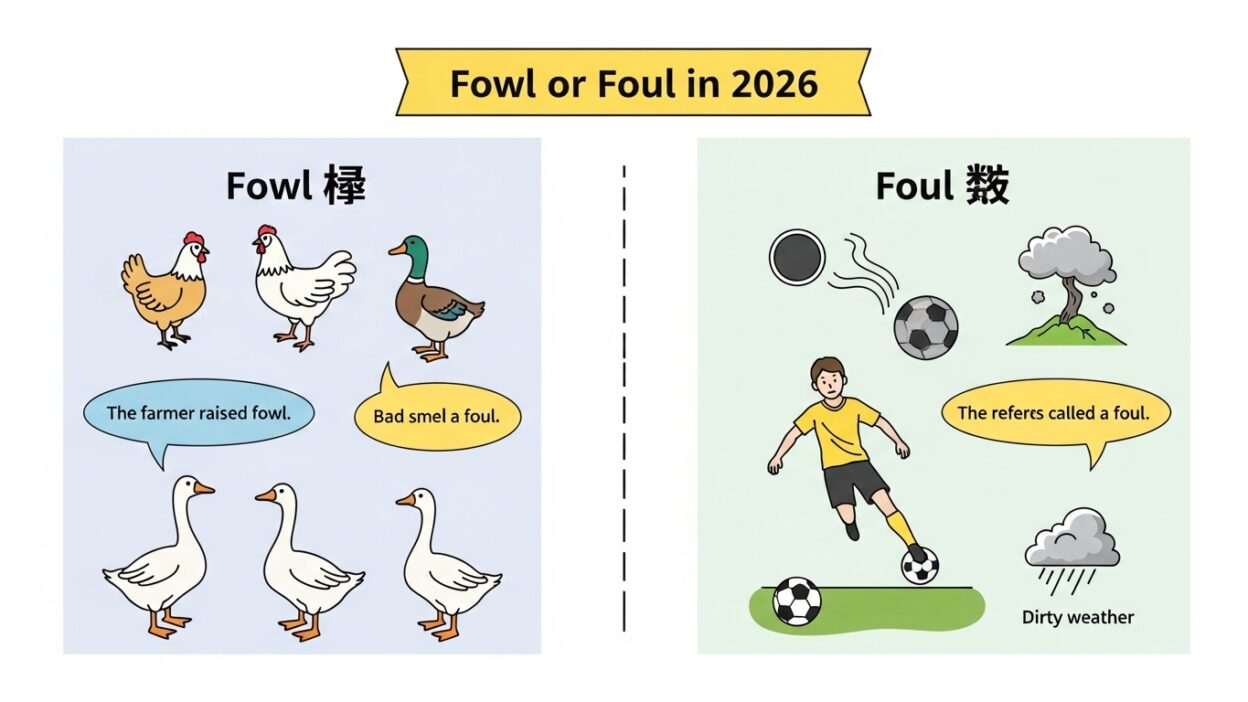
- ✅ Fowl = a bird (chicken, duck, goose, turkey, etc.)
- ✅ Foul = bad, dirty, unfair, or against rules
- Tip: Ask yourself: “Am I talking about a bird?” → Yes → fowl, No → foul
Fowl Meaning: Birds and More
- Fowl meaning: Birds, usually raised for food or seen in the wild.
- Examples include chickens, ducks, geese, and turkeys.
- Fowl is a noun.
Fowl Examples:
- “The farmer raised ducks and other fowl on his farm.”
- “Wild fowl often fly south in winter.”
- “We spotted many water fowl near the lake.”
Beginner tip: Whenever you see fowl, think of birds.
Foul Meaning: Bad, Dirty, or Against the Rules
- Foul meaning:
- Bad, dirty, or smelly
- Against rules (sports or games)
- Unpleasant, unfair, or dangerous
Foul Examples:
- “There was a foul smell coming from the trash.”
- “The soccer player committed a foul.”
- “The weather turned foul during our hike.”
- “He made a foul comment that upset everyone.”
Beginner tip: Use foul examples for bad, dirty, or unfair situations.
Origin / Background of Fowl and Foul
- Fowl has been in English since the 1300s and comes from Old English “fugol,” meaning bird.
- Foul comes from Old English “fūl,” meaning dirty or rotten.
- Tip: Fowl is mostly used in farming, wildlife, and cooking.
- Tip: Foul is used in sports, hygiene, or describing unpleasant situations.
Knowing the origin helps remember the difference: bird = fowl, bad/dirty = foul.
Clear Explanation: Fowl vs Foul
| Feature | Fowl | Foul |
| Part of Speech | Noun | Adjective / Noun (sports) |
| Meaning | Bird | Bad, dirty, unfair, or against rules |
| Examples | “The farm has many fowl.” | “The referee called a foul.” |
| Context | Farming, cooking, wildlife | Sports, hygiene, unpleasant situations |
| Tip | Only for birds | For bad, dirty, or unfair things |
Tip for learners: “Fowl = bird” → easy to remember.
How to Use Fowl and Foul
- Fowl:
- Nature or wildlife: “Wild fowl migrate south.”
- Farming: “We keep chickens and other fowl.”
- Cooking: “Roast a whole fowl for dinner.”
- Foul:
- Sports: “The player committed a foul in basketball.”
- Smells: “There was a foul odor in the kitchen.”
- Behavior: “Making foul comments is not polite.”
- Weather: “The storm created foul conditions.”
Rule: Ask yourself: Am I talking about a bird? → fowl; else → foul.
Common Mistakes
- Writing foul when referring to birds
- Writing fowl for bad smells, unfair rules, or dirty situations
- Forgetting that foul can also be a noun in sports
- Mixing up pronunciation (they sound identical)
Tip: Always think about context: bird = fowl, bad/dirty/unfair = foul.
Everyday Real Life Examples
1. Nature & Farming
- ✅ “The pond is full of wild fowl.”
- ❌ “The pond is full of wild foul.”
2. Sports
- ✅ “He committed a foul in the soccer game.”
- ❌ “He committed a fowl in the soccer game.”
3. Smells & Cleanliness
- ✅ “There was a foul odor in the kitchen.”
- ❌ “There was a fowl odor in the kitchen.”
4. Daily Conversation
- ✅ “The referee called a foul during the match.”
- ✅ “The farmer had chickens and other fowl roaming freely.”
5. Mini Dialogues
Dialogue 1:
- Mia: “What’s that noise outside?”
- Leo: “It’s the fowl in the backyard.”
Dialogue 2:
- Alex: “Did you smell that?”
- Sam: “Yes! It’s a foul smell from the trash.”
Dialogue 3:
- Coach: “That’s a foul! No pushing in soccer.”
- Player: “Sorry, coach!”
Short Learning Section for Students and Beginners
- Fowl = bird
- Foul = bad, dirty, unfair, or against rules
- Mini Exercise: Fill in the blanks with fowl or foul:
- The farmer raised ducks and other ___ on his farm.
- The basketball player committed a ___.
- There was a ___ smell coming from the kitchen.
- Wild ___ migrate south in winter.
Answers: 1. fowl, 2. foul, 3. foul, 4. fowl
Practice helps learners remember fowl or foul spelling and usage.
FAQ (Frequently Asked Questions)
1. Which is correct, fowl or foul?
- Both are correct, but fowl = bird, foul = bad/dirty/unfair.
2. Can “foul” be a noun?
- ✅ Yes, especially in sports. “He committed a foul.”
3. Can “fowl” be plural?
- ✅ Yes. “Many fowl fly south in winter.”
4. Are they pronounced the same?
- ✅ Yes, both are homophones (/faʊl/).
5. Can “foul” describe smells?
- ✅ Yes. “The room had a foul odor.”
6. Can “fowl” be used in cooking?
- ✅ Yes. “We roasted a whole fowl for dinner.”
7. Should beginners be careful using them?
- ✅ Absolutely. Mixing them up changes meaning completely.
8. What are examples of fowl and foul?
- Fowl: “The farm raised ducks and other fowl.”
- Foul: “He committed a foul in the soccer match.”
Conclusion
The difference between fowl or foul is simple:
- ✅ Fowl = a bird (chicken, duck, goose, turkey, etc.)
- ✅ Foul = bad, dirty, unfair, or against rules
Remember: fowl = bird, foul = bad or dirty. Use this guide, practice exercises, and examples to confidently use these words in everyday life, sports, cooking, and conversations.