Many people get confused between foul or fowl. They sound almost the same, but their meanings are very different. Students, learners and beginners often ask: “What is foul?” or “What is fowl?”
Don’t worry! In this article, we will explain the difference between foul and fowl in very simple English, with easy examples, tables, and tips so you can understand it on the first read.
Quick Answer: Foul vs Fowl
| Word | Meaning | Easy Example |
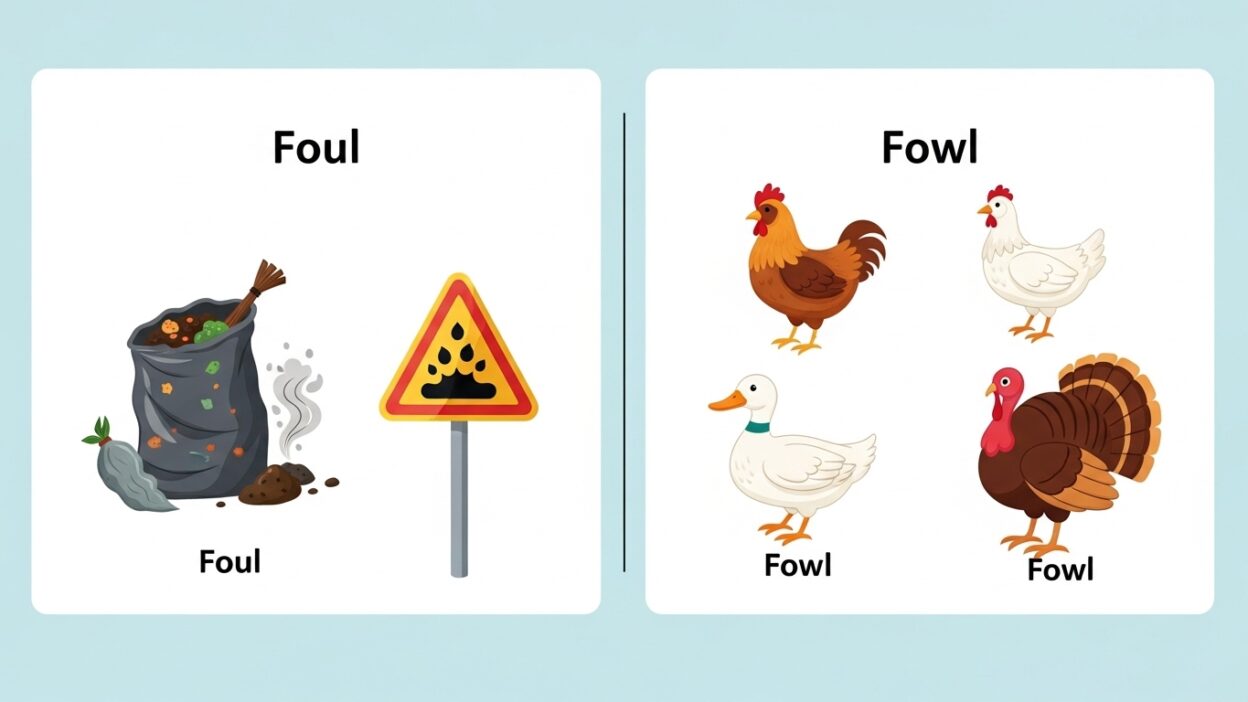
| Foul | Bad, dirty, unpleasant, unfair | “The trash smells foul.” |
| Fowl | Birds, especially chickens, ducks, or turkeys | “The farm has many fowl.” |
Tip to Remember:
- Foul = bad or dirty → Think: “Eww, that’s foul!”
- Fowl = bird → Think: “Farm fowl.”
This table is a quick way to remember the difference between foul and fowl.
What is Foul?
Foul means:
- Something bad, dirty, or unpleasant
- A rule violation in sports
- Bad behavior or language
Examples:
- “The bathroom smells foul 😷.”
- “He committed a foul in football ⚽.”
- “Don’t use foul words at school.”
What is Fowl?
Fowl means:
- Birds, especially domestic or farm birds like chickens, ducks, and turkeys
- Sometimes used for bird meat
Examples:
- “The farm has many fowl 🐓🦆.”
- “We ate roasted fowl for dinner 🍗.”
- “She feeds the fowl every morning.”
Easy Comparison Table
| Feature | Foul | Fowl |
| Meaning | Bad, dirty, unfair | Bird (farm or domestic) |
| Examples | Foul smell, foul language, sports foul | Chicken, duck, turkey |
| Use | Describing smell, behavior, or sports | Talking about birds or meat |
| Remember | Eww, foul! | Farm fowl |
When to Use Each Word
Use Foul:
- Smells: “The garbage smells foul.”
- Sports: “He committed a foul in the game.”
- Behavior: “That was a foul trick.”
Use Fowl:
- Birds: “The farm has many fowl.”
- Meat: “We are cooking fowl for dinner.”
Remember: Foul = bad, Fowl = bird.
Common Mistakes People Make
- Writing fowl when they mean foul
- ❌ “The milk smells fowl.”
- ✅ “The milk smells foul.”
- ❌ “The milk smells fowl.”
- Writing foul when they mean fowl
- ❌ “The farm has many foul.”
- ✅ “The farm has many fowl.”
- ❌ “The farm has many foul.”
- Using sports or cooking terms incorrectly:
- ❌ “I ate a foul for dinner.”
- ✅ “I ate fowl for dinner.”
- ❌ “I ate a foul for dinner.”
Everyday Real Life Examples
Emails:
- “Please do not use foul language in emails.”
- “We raised fowl at the farm last year.”
News Headlines:
- “The player committed a foul in the last minute of the match.”
- “The market reports higher sales of fowl this month.”
Social Media:
- “The trash smells foul 😷”
- “Look at these cute fowl at the farm! 🐓🦆”
Daily Life:
- “Your shoes smell foul after the run.”
- “Grandma cooked roasted fowl for dinner 🍗.”
Simple Learning Tips for Students and Learners
- Listen Carefully: Both sound like /faʊl/.
- Check the Context: Is it about something bad or about a bird?
- Use This Trick:
- Foul = bad/dirty → Think “Eww!”
- Fowl = bird → Think “Farm fowl.”
- Foul = bad/dirty → Think “Eww!”
- Practice with Sentences:
- “The milk smells ______.” → foul
- “The farm has many ______.” → fowl
- “The milk smells ______.” → foul
Mini Quiz:
Fill in the blank:
- “Don’t use ______ words at school.” → foul
- “The farm has many ______.” → fowl
FAQ Section
Q: Can I use “foul” for a bird?
A: No. Use “fowl” for birds.
Q: Can “fowl” mean bad or dirty?
A: No. “Fowl” only refers to birds.
Q: Can “foul” describe smells?
A: Yes, for example: “The milk smells foul.”
Q: Is “fowl” used in modern English?
A: Yes, mainly in cooking or talking about farm birds.
Q: How can I remember the difference?
A: Think: foul = bad, fowl = bird.
Q: Can “foul” be used in sports?
A: Yes, it means a rule violation.
Q: Are there other examples of “fowl”?
A: Chicken, duck, turkey, goose.
Q: Can I say “fowl game” instead of “foul game”?
A: No, use “foul game” because it means unfair or against the rules.
Conclusion
Understanding foul and fowl is simple once you know their meanings:
- Foul = bad, dirty, or unfair
- Fowl = birds, especially farm birds
Check the context carefully before using the word. Use the mnemonic trick:
- Foul = bad/dirty → Eww!
- Fowl = bird → Farm fowl
Practice with daily examples, emails, and social media posts. Soon, using them correctly will feel natural!