English can be tricky! Words like elude vs allude sound similar but have very different meanings.
This article will help students, learners and beginners understand the difference clearly, remember it easily, and use the words correctly in real life.
Why People Confuse Elude and Allude
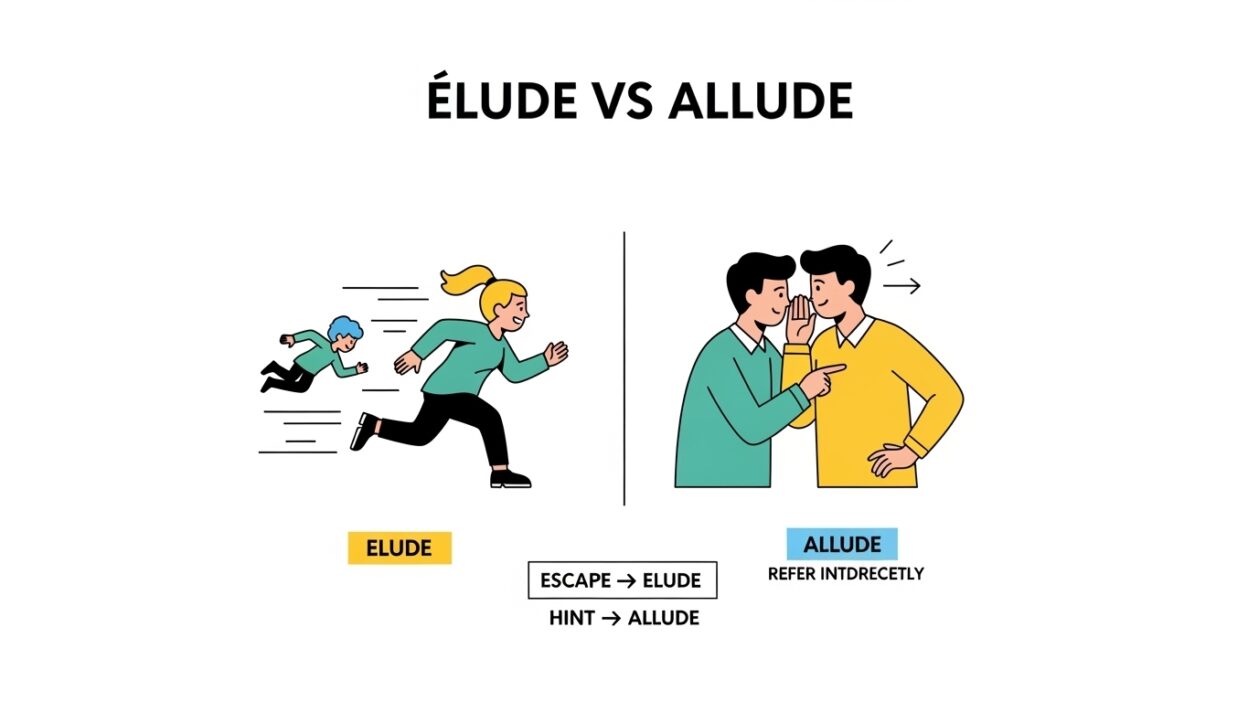
- Elude means to escape or avoid.
- Allude means to hint at or refer to something indirectly.
Because they sound almost the same, many people mix them up. But once you understand their meanings and usage, it’s very easy to remember the difference.
Quick Answer: Elude vs Allude
- Elude → Escape or avoid
- Example: “The thief eluded the police.”
- Example: “The thief eluded the police.”
- Allude → Hint at or refer to indirectly
- Example: “She alluded to her childhood in the story.”
- Example: “She alluded to her childhood in the story.”
Easy trick to remember:
- E → Escape → Elude
- A → Announce indirectly → Allude
Pronunciation Tips
- Elude: /i-LOOD/ → sounds like “ee-lood”
- Allude: /ə-LOOD/ → sounds like “uh-lood”
Tip: Say them aloud and think of escaping (elude) vs hinting (allude).
Origin of the Words
- Elude comes from Latin eludere, meaning “to escape”.
- Allude comes from Latin alludere, meaning “to hint or refer indirectly”.
Remember: E = Escape, A = Announce indirectly.
Difference Between Elude and Allude
| Feature | Elude | Allude |
| Meaning | Escape, avoid, or fail to understand | Hint at, mention indirectly |
| Part of speech | Verb | Verb |
| Usage | Physical escape, avoiding situations, failing to understand | Hinting, referencing, mentioning indirectly |
| Examples | “The thief eluded the police.”“The answer eluded me.” | “He alluded to the book without naming it.”“She alluded to her teacher in the story.” |
| Memory trick | E = Escape | A = Announce indirectly |
When to Use Elude or Allude
Use Elude when:
- Someone or something is running away or escaping
- You cannot find or understand something
- Talking about avoiding problems
Use Allude when:
- You want to mention something indirectly
- You are hinting or referring to something without naming it
Common Mistakes
- Writing allude instead of elude
- ❌ “The thief alluded the police.” → ✅ “The thief eluded the police.”
- ❌ “The thief alluded the police.” → ✅ “The thief eluded the police.”
- Writing elude instead of allude
- ❌ “He eluded to the book in class.” → ✅ “He alluded to the book in class.”
- ❌ “He eluded to the book in class.” → ✅ “He alluded to the book in class.”
- Forgetting “allude” usually needs to
- ❌ “I will allude you tomorrow.” → ✅ “I will allude to you tomorrow.”
- ❌ “I will allude you tomorrow.” → ✅ “I will allude to you tomorrow.”
Everyday Examples of Elude and Allude
Emails:
- Elude: “I’m sorry, the details of the meeting eluded me.”
- Allude: “In my email, I alluded to a new project.”
News:
- Elude: “The escaped prisoner eluded authorities for three days.”
- Allude: “The article alluded to political tensions without naming anyone.”
Social Media:
- Elude: “My dog eluded me again while playing fetch 🐕”
- Allude: “She alluded to her vacation in her story 🌴”
Daily Life:
- Elude: “The solution eluded me, even after trying for an hour.”
- Allude: “He alluded to the surprise party without telling me directly.”
Mini Quiz: Practice Using Elude and Allude
Fill in the blanks with elude or allude:
- The cat _______ the dog and ran up the tree. → Elude
- In her speech, she _______ to the new movie. → Allude
- The meaning of the poem _______ me. → Elude
- He _______ to his favorite teacher without naming him. → Allude
Answers: 1-Elude, 2-Allude, 3-Elude, 4-Allude
Short Learning Tips for Students
- Visual memory trick:
- Picture a thief escaping → Elude
- Picture someone winking and hinting → Allude
- Picture a thief escaping → Elude
- Sound trick:
- Elude = ee-lood → think “escape”
- Allude = uh-lood → think “hint”
- Elude = ee-lood → think “escape”
- Write examples daily:
- Use emails, texts, or diary entries to practice elude vs allude examples
- Use emails, texts, or diary entries to practice elude vs allude examples
FAQ: Elude vs Allude
1. Can “elude” and “allude” be used interchangeably?
No. One is about escaping, the other about hinting.
2. Is “elude” always physical?
No. It can also mean something is hard to understand: “The solution eluded me.”
3. Can “allude” be used with “to”?
Yes. Always say “allude to something”.
4. Is “elude” followed by “to”?
No. Say “elude someone or something”, not “elude to.”
5. How do I remember the difference?
E = Escape → Elude | A = Announce indirectly → Allude
6. Can I use “allude” in formal writing?
Yes, it is common in essays, speeches, and articles.
7. Can “elude” be used in stories?
Yes. Especially when talking about escaping or missing things.
8. Are these words common in daily English?
Yes. Elude is common in stories/news. Allude is common in writing and conversations.
Conclusion
Elude vs allude may look and sound similar, but their meanings are very different:
- Elude → Escape, avoid, or fail to understand
- Allude → Hint at or refer to indirectly
Remember: E = Escape, A = Announce indirectly.
Practice with mini quizzes, daily examples, and real life sentences. Soon, using elude vs allude correctly will become natural and easy!