Many students, learners and even native speakers feel confused about anyway vs anyways.
They look almost the same.
They sound almost the same.
They seem to mean the same thing.
So people naturally ask:
- Which one is correct?
- Is “anyways” correct grammar?
- Can I use “anyways” in writing?
- Why do people even say “anyways”?
This guide will remove all confusion in very simple English. By the end, you will understand not only the difference between anyway and anyways, but also why the difference exists.
Quick Answer
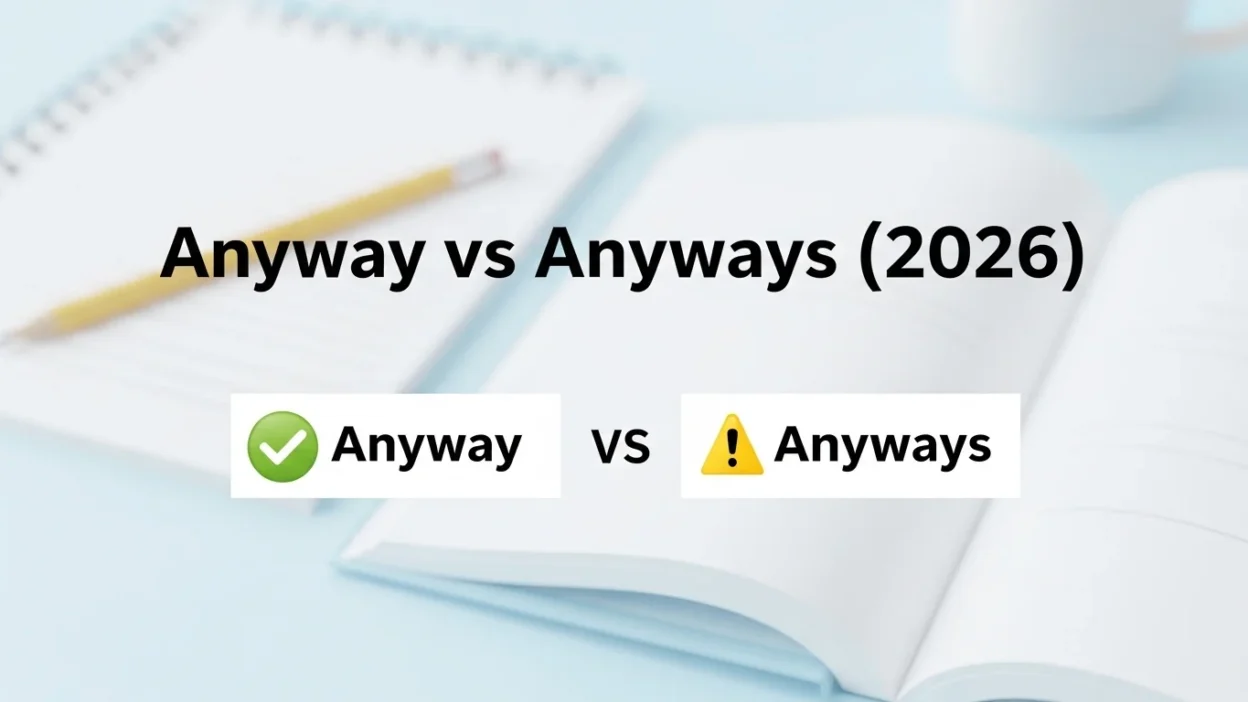
- ✅ Anyway = correct in all situations (formal and informal)
- ⚠️ Anyways = informal, casual, mostly spoken
- 📚 In school, exams, or professional writing → use anyway
- 🗣 In relaxed conversation → “anyways” is sometimes used
If you want to be 100% safe, always choose anyway.
What Does “Anyway” Mean?
Let’s start with the anyway meaning.
“Anyway” is an adverb. (An adverb describes how something happens or connects ideas.)
It usually means:
- In any case
- Regardless
- Let’s continue
- Let’s return to the main topic
Anyway in a sentence:
- Anyway, let’s begin the lesson.
- I was tired. Anyway, I finished my homework.
- Anyway, what were we talking about?
It helps move the conversation forward.
What Does “Anyways” Mean?
Now let’s look at the anyways meaning.
“Anyways” has almost the same meaning as “anyway.” It is also used to:
- Change the topic
- Continue speaking
- Return to something important
Anyways in a sentence:
- Anyways, let’s go home.
- I didn’t like the movie. Anyways, it was okay.
The meaning is the same.
So what is the real difference?
The Real Difference Between Anyway and Anyways
The main difference is formality and standard grammar.
| Anyway | Anyways |
| Standard English | Informal English |
| Used in writing | Mostly spoken |
| Accepted in exams | Not recommended in exams |
| Considered correct | Considered nonstandard |
Now let’s go deeper.
Why Do Teachers Dislike “Anyways”?
Many students ask: Is anyways correct grammar?
Here is the honest answer:
- It is commonly used in speech.
- But it is considered nonstandard English.
- Many teachers mark it wrong in academic writing.
Why?
Because historically, “anyway” was already correct. The “s” was added later in casual speech. But the “s” does not change the meaning.
Some people feel the “s” sounds unnecessary or grammatically incorrect because:
- “Anyway” is an adverb.
- Adverbs usually do not become plural.
- The extra “s” does not add new meaning.
So in formal English, “anyway” remains the correct form.
Why Do People Say “Anyways”?
This is an important question.
People often add an “s” at the end of words in casual speech. It can make the word feel softer or more relaxed.
In American informal speech especially, “anyways” became common in conversation.
But common does not always mean standard.
So:
- In everyday conversation → you will hear “anyways.”
- In formal writing → you will almost always see “anyway.”
Tone Difference: How They Feel
Understanding tone helps remove confusion.
Anyway feels:
- Neutral
- Calm
- Professional
- Clean
Anyways feels:
- Casual
- Relaxed
- Friendly
- Slightly informal
Example:
Professional email:
- Anyway, I will send the report tomorrow. ✅
Casual text message:
- Anyways, talk later! ✅
The tone difference is small but important.
Anyway vs Anyways Grammar Rules (Simple Version)
Here are clear rules you can follow:
- Use anyway in essays.
- Use anyway in exams.
- Use anyway in work emails.
- Use anyways only in casual speech.
- If unsure → choose anyway.
That’s it.
Don’t Confuse “Anyway” With “Any Way”
This is another common English grammar mistake.
These are different:
Anyway (one word)
Means: in any case / continue speaking
Example:
- Anyway, let’s move on.
Any way (two words)
Means: any method or any possibility
Example:
- Is there any way to fix this problem?
Many learners mix these up. Always check if you mean “continue talking” or “any method.”
Everyday Real Life Examples
Here are practical examples from real situations.
In School Writing
- Anyway, this shows that practice is important.
- Never write: Anyways, this shows that practice is important.
In Business Emails
- Anyway, please review the document.
- Avoid: Anyways, please review the document.
On Social Media
- I didn’t win. Anyways, it was fun!
- This is fine because it is casual.
In Conversation
- Anyway, what are your weekend plans?
- Anyways, let’s grab coffee.
Both are heard in speech.
Regional Usage: American vs British English
- In both American and British English, anyway is standard.
- “Anyways” is more common in informal American speech.
- In British formal writing, “anyways” is rarely used.
But in both regions, teachers recommend using “anyway.”
Common English Grammar Mistakes
Here are mistakes students often make:
❌ Using “anyways” in academic essays
❌ Thinking “anyways” has a different meaning
❌ Confusing “anyway” with “any way”
❌ Believing “anyways” is more modern or better
Remember: standard English still prefers “anyway.”
Short Learning Section for Learners
If you are studying English, follow this simple advice:
Step 1: Learn the Standard Form First
Always practice with “anyway.”
Step 2: Notice Casual Speech
When watching movies, you may hear “anyways.” Understand it, but don’t copy it in formal writing.
Step 3: Practice Writing
Write 5 sentences using “anyway.”
Example:
- Anyway, I decided to try again.
Step 4: In Exams
If asked:
Anyway or anyways: which is correct?
The correct answer is:
👉 Anyway
FAQ Section
1. What is the difference between anyway and anyways?
The difference is formality. “Anyway” is standard English. “Anyways” is informal.
2. Is anyways correct grammar?
It is used in casual speech, but it is considered nonstandard in formal writing.
3. Can I use anyways in an academic essay?
No. Always use “anyway.”
4. Do they have different meanings?
No. The meaning is almost the same.
5. Why did people add the “s”?
It developed in casual speech over time. The extra “s” does not change the meaning.
6. Which one is better for learners?
“Anyway” is always better and safer.
7. Is anyways becoming accepted?
It is common in speech, but standard grammar books still prefer “anyway.”
8. What about “any way”?
“Any way” means any method or possibility. It is different from “anyway.”
Conclusion
The confusion about anyway vs anyways is very common, but the rule is simple:
- Anyway = correct, standard, professional
- Anyways = casual, informal, mostly spoken
- Meaning = almost the same
- For school, exams, or work → always use anyway
If you remember this one rule, you will never feel confused again.
English becomes easier when small differences are explained clearly. Keep learning step by step, and your confidence will grow every day.