Many students, learners and general readers often get confused between Allie vs Ally. They sound almost the same, but they have very different meanings and uses.
This article explains everything in simple English with examples, exercises, and tips so you can understand it easily.
Why People Get Confused
People confuse Allie vs Ally because:
- They sound similar.
- Some learners write one instead of the other.
- They may not know the meanings and uses.
Once you know the Allie meaning and Ally meaning, it becomes very easy to remember the difference.
Quick Answer
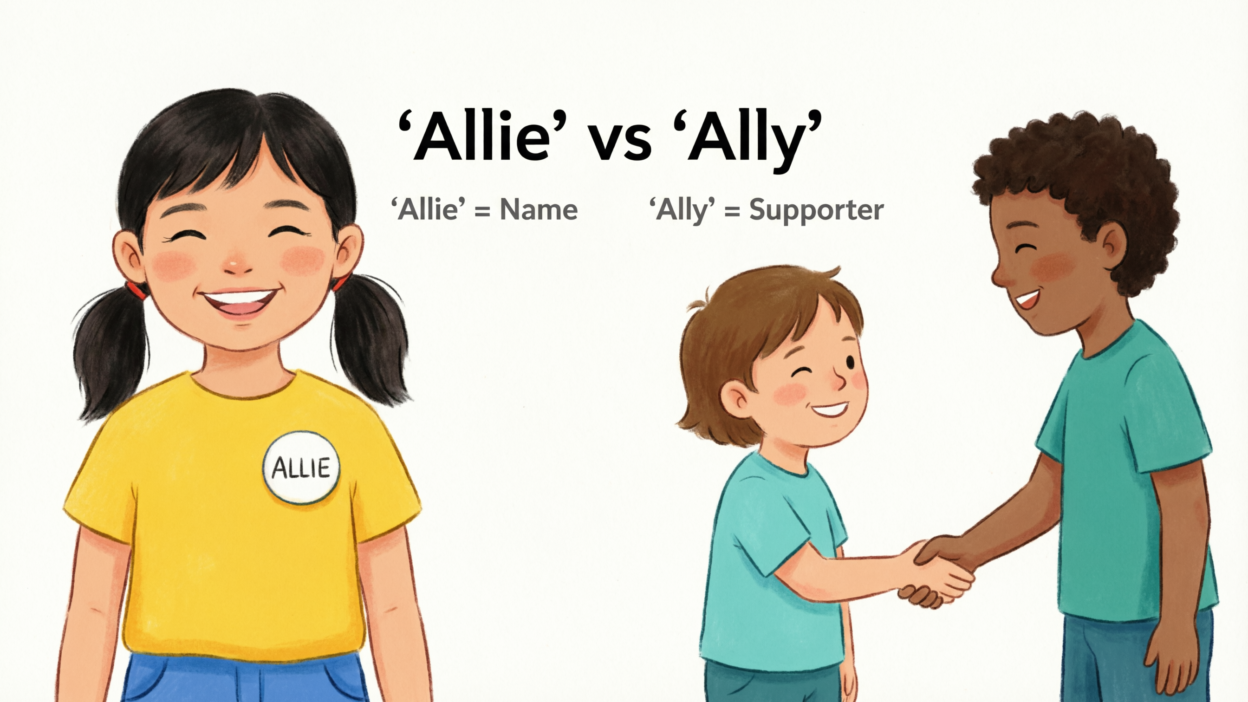
Quick Guide to Allie vs Ally:
- Allie
- Pronunciation: /ˈæli/ (AL-ee)
- Meaning: A person’s name.
- Example: “Allie is my friend.” ✅
- Pronunciation: /ˈæli/ (AL-ee)
- Ally
- Pronunciation: /ˈælaɪ/ (AL-eye)
- Meaning: A supporter, friend, or helper.
- Example: “He is my ally in school projects.” ✅
- Pronunciation: /ˈælaɪ/ (AL-eye)
Memory Trick:
- Allie = ie → name (person)
- Ally = y → helper/supporter
Origin and Background
- Allie:
- Short form of Allison, Alexandra, or Alice.
- Used as a nickname or first name.
- Short form of Allison, Alexandra, or Alice.
- Ally:
- From Latin “alligare”, meaning “to bind together.”
- Used since the 1300s in English to describe partners, friends, or countries that support each other.
- From Latin “alligare”, meaning “to bind together.”
Clear Explanation of the Difference
| Word | Part of Speech | Meaning | Example |
| Allie | Proper noun | A person’s name | “Allie is my sister.” |
| Ally | Noun | A supporter, friend, or partner | “Canada is an ally of the USA.” |
Key Points:
- Allie is always a name. Capitalize it.
- Ally is a common noun. You can have an ally, but you cannot have an allie unless it is a name.
Which One to Use and When
- Use Allie when talking about a person’s name.
- Use Ally when talking about a friend, supporter, or partner.
Examples:
- Correct: “Allie loves reading books.” ✅
- Correct: “My best ally helped me with homework.” ✅
- Wrong: “He is my allie in school projects.” ❌
- Wrong: “Ally is coming to dinner.” ❌ (unless the person’s name is Ally)
Common Mistakes People Make with Allie vs Ally
- Writing “allie” when they mean a supporter.
- ❌ “She is my allie in the team.”
- ✅ “She is my ally in the team.”
- ❌ “She is my allie in the team.”
- Forgetting to capitalize Allie as a name.
- Thinking Ally is only for countries or politics.
- Wrong: “Only governments can have allies.”
- Correct: “Friends and coworkers can also be allies.”
- Wrong: “Only governments can have allies.”
- Mixing pronunciation: “Allie vs Ally pronunciation” is slightly different.
Real Life Examples of Allie vs Ally
Emails:
- “Hi Allie, can you check the report?” (name)
- “We need an ally to finish this project.” (supporter)
News:
- “The USA and UK are allies in defense.”
- “Allie won the student of the year award.”
Social Media:
- “Shoutout to my ally who helped me with homework!”
- “Happy birthday, Allie! 🎉”
TV & Movies:
- In Friends: “Ross is Rachel’s ally in her work project.”
- A character named Allie appears in The Notebook.
Daily Life:
- Friends helping each other: “Thank you for being my ally.”
- Talking about someone named Allie: “Allie is really kind and smart.”
Mini Exercises for Practice
Fill in the blanks with Allie or Ally:
- My best ______ helped me study for the exam.
- ______ is coming to the party tonight.
- The USA is an ______ of Canada.
- ______ loves to play basketball every weekend.
Answers: 1) Ally 2) Allie 3) ally 4) Allie
Short Learning Section for Students
- Allie = name → think of a person.
- Ally = supporter → think of friendship or teamwork.
- Practice sentences:
- “Allie is my friend.”
- “My ally helped me with homework.”
- “Allie is my friend.”
- Remember capitalization: Allie vs ally.
- Use the memory trick: ie = name, y = helper.
FAQ About Allie vs Ally
Q: Can “Ally” be a name?
A: Yes, but it is less common. Usually, “Allie” is the name.
Q: Can “Allie” mean a helper?
A: No. Use ally for someone who supports you.
Q: Do I capitalize “ally”?
A: No, unless it starts a sentence or is in a title.
Q: Are “Allie” and “Ally” pronounced the same?
A: Almost. “Allie” = AL-ee, “Ally” = AL-eye.
Q: Can a country be an ally?
A: Yes, countries can be allies in wars or agreements.
Q: Can friends be allies?
A: Yes, friends can be allies if they support you.
Q: How do I remember the difference?
A: “Allie = name” and “Ally = helper/supporter.”
Q: Where can I see examples of Allie vs Ally?
A: In emails, social media, news, TV, movies, and books.
Conclusion
The difference between Allie vs Ally is simple:
- Allie → a person’s name
- Ally → a supporter, friend, or partner
Use the memory trick, practice with examples, and do exercises. Soon, you’ll never mix them up again, and understanding Allie vs Ally will feel natural.