Learning music can be tricky, especially when you see terms like acciaccatura and appoggiatura. Both are music ornaments small notes that decorate a melody but they are very different.
Many beginners and learners get confused because the names are long, Italian, and similar. This guide will help you understand the difference clearly, even if you’ve never read sheet music before.
Why People Get Confused About Acciaccatura and Appoggiatura
- Both involve a small note in music before or near a main note.
- Both are written in sheet music symbols, often as tiny notes.
- Without seeing or hearing them, it’s hard to understand how long they last or how they affect the main note.
- The names sound similar, which makes it even more confusing.
Quick Answer: Acciaccatura vs Appoggiatura
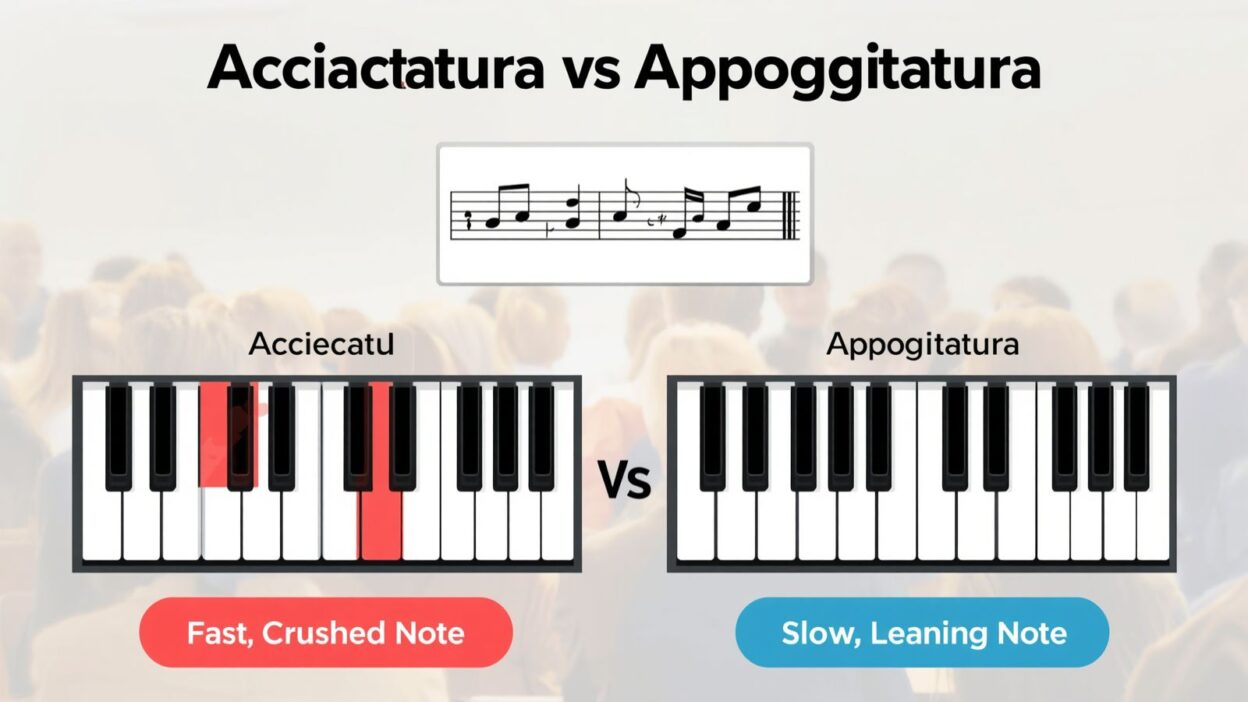
- Acciaccatura
- Very short, quick, and light.
- Does not steal time from the main note.
- Often written as a small note with a slash.
- Also called a crushed note.
- Appoggiatura
- Longer and more expressive.
- Steals some time from the main note.
- Written as a small note without a slash.
- Also called a leaning note.
Origins: The History Behind These Musical Ornaments
- Both words are Italian because composers in the Baroque and Classical periods used Italian terms for ornaments.
- Acciaccatura literally means “crushed note,” which explains its quick, decorative style.
- Appoggiatura literally means “leaning note,” because it leans into the main note to add emotion.
- Famous composers like Mozart, Beethoven, and Chopin frequently used both musical ornaments in their pieces.
How Acciaccatura and Appoggiatura Differ
| Feature | Acciaccatura | Appoggiatura |
| Meaning | Crushed note | Leaning note |
| Duration | Very short | Longer, expressive |
| Timing | Almost on the beat | On the beat, stealing time |
| Effect on Main Note | Minimal | Changes the main note’s length |
| Notation | Small note with a slash | Small note without a slash |
| Emotional Effect | Quick decoration | Emotional, expressive |
| Example on Piano | Fast touch before main note | Slowly leaning into main note |
Tip: Think of acciaccatura as a quick tick and appoggiatura as a slow, leaning pause.
How to Play Acciaccatura and Appoggiatura: Step by Step for Beginners
Step 1: Play the main note alone to hear it clearly.
Step 2: Add a quick acciaccatura tap it very fast before the main note.
Step 3: Add a appoggiatura hold it slightly longer so it leans into the main note.
Step 4: Listen carefully and repeat slowly, gradually speeding up for acciaccatura.
Step 5: Practice with simple sheet music symbols until you can recognize them visually and play them naturally.
💡 Pro Tip: Watch videos of Mozart or Chopin pieces on piano or violin to hear these ornaments in action. Audio really helps beginners distinguish the two.
When to Use Each Ornament
- Acciaccatura:
- Use in fast, light passages.
- Perfect for quick decorative notes in classical music.
- Appoggiatura:
- Use in slow, expressive melodies.
- Ideal for adding emotion and tension in romantic or lyrical pieces.
Common Mistakes to Avoid
- Thinking all small notes in music are appoggiaturas.
- Playing acciaccaturas too slowly.
- Ignoring the emotional effect of appoggiaturas.
- Confusing sheet music symbols (slash vs no slash).
- Skipping ornaments because they seem optional they are essential for the style.
Everyday Real Life Examples
Even outside instruments, you can relate to these ornaments:
- Acciaccatura:
- Typing a quick “oops” before sending a message.
- Saying “um” quickly before a word.
- Appoggiatura:
- Pausing on a word for emphasis while speaking.
- Singing “Happy Birthday” slowly and holding the first note.
- Leaning slightly into a ringtone melody for effect.
FAQs About Acciaccatura and Appoggiatura
- Are acciaccatura and appoggiatura the same?
No. One is a fast note, the other is a slow, expressive music note. - Do I need to play them exactly as written?
Yes. They are part of the musical ornaments and affect the music’s feel. - Which one is more emotional?
Appoggiatura it leans into the main note, creating tension and expression. - Which one is faster?
Acciaccatura is very quick and short. - Can beginners use them?
Yes. Start slowly and practice step by step to recognize both in sheet music. - Do singers use them too?
Absolutely. Vocal music often has appoggiaturas for emotional effect. - How can I identify them in sheet music?
Look for a slash through a small note for acciaccatura, none for appoggiatura. - Are they only in classical music?
Mostly classical, but modern music, jazz, and pop sometimes use similar musical ornaments.
Learning Tips for Students and Beginners
- Listen to examples of both ornaments from Mozart, Beethoven, and Chopin.
- Use a step by step practice method (quick tap vs slow lean).
- Tap on a table to feel the difference: quick tap = acciaccatura, leaning tap = appoggiatura.
- Watch videos with audio examples hearing them is the fastest way to learn.
- Recognize sheet music symbols for both ornaments in beginner scores.
Conclusion
Acciaccatura and appoggiatura are small notes with a big impact on music:
- Acciaccatura = fast, crushed note
- Appoggiatura = slow, leaning note
With practice, listening, and a step by step approach, beginners can easily recognize and play these musical ornaments. They make music expressive, lively, and full of emotion.
🎵 Tip: Combine visual learning, audio examples, and practical practice to master them faster.